Course Information
| Session |
|---|
| Credits | 1.5 CEUs or 15 PDHs |
|---|---|
| Registration dates | We accept registrations through the first week of classes, unless enrollment is full, and unless the class was canceled before it started due to low enrollment. |
$250.00
Dates: August 3 - August 30Credits: 1.5 CEUs or 15 PDHs
Artificial intelligence is becoming increasingly common in library tools—from search boxes and cataloging software to planning platforms that claim to “analyze community needs.” However, AI cannot replace the dedicated people who make libraries function. Library staff provide what no technology can: empathy, context, professional judgment, and a deep understanding of their communities.
This four-week online course helps library workers understand what AI can realistically accomplish, where it falls short, and how it can cause harm if implemented without careful consideration.
You will explore how AI influences everyday library tasks, such as organizing materials, answering questions, planning programs, and assisting patrons in finding and using information.
Equally important, you will develop skills to advocate for your own expertise when engaging with administrators, vendors, or community partners.
By the end of the course, you will be able to:
– Confidently use clear vocabulary to explain AI concepts to stakeholders, such as patrons and organizational decision-makers.
– Recognize situations where human involvement is essential.
– Advocate within your organization to promote thoughtful decisions that support inclusion, accessibility, and the library’s mission.
– Whether you are new to AI or already experimenting with it, this course will strengthen your professional skills and enhance your ability to lead conversations about emerging technologies in your workplace.
| Session |
|---|
| Credits | 1.5 CEUs or 15 PDHs |
|---|---|
| Registration dates | We accept registrations through the first week of classes, unless enrollment is full, and unless the class was canceled before it started due to low enrollment. |
Artificial intelligence is becoming increasingly common in library tools—from search boxes and cataloging software to planning platforms that claim to “analyze community needs.” However, AI cannot replace the dedicated people who make libraries function. Library staff provide what no technology can: empathy, context, professional judgment, and a deep understanding of their communities.
This four-week online course helps library workers understand what AI can realistically accomplish, where it falls short, and how it can cause harm if implemented without careful consideration.
You will explore how AI influences everyday library tasks, such as organizing materials, answering questions, planning programs, and assisting patrons in finding and using information.
Equally important, you will develop skills to advocate for your own expertise when engaging with administrators, vendors, or community partners.
By the end of the course, you will be able to:
– Confidently use clear vocabulary to explain AI concepts to stakeholders, such as patrons and organizational decision-makers.
– Recognize situations where human involvement is essential.
– Advocate within your organization to promote thoughtful decisions that support inclusion, accessibility, and the library’s mission.
– Whether you are new to AI or already experimenting with it, this course will strengthen your professional skills and enhance your ability to lead conversations about emerging technologies in your workplace.
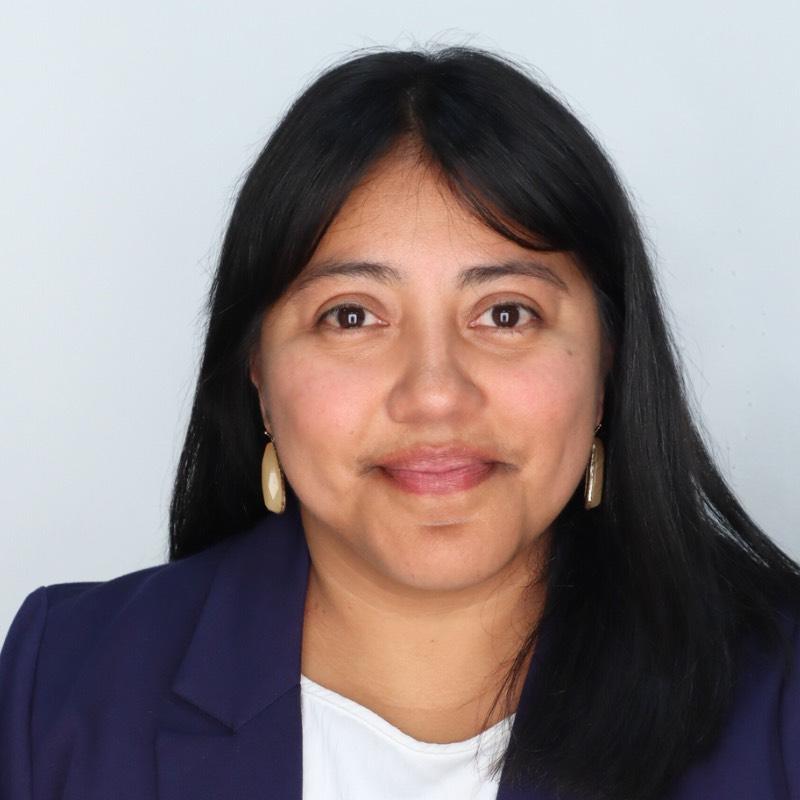 Lisa Cruces is an independent consultant specializing in academic libraries, archives, and organizational development. Previously, Cruces has held positions at the Harry Ransom Center, University of Notre Dame, the University of Houston, and Texas State University, as well as advisory roles for non-institutional community archives and BIPOC collectives. Cruces completed her master of science in Information Studies at the University of Texas at Austin with a focus in archives and special collections and is currently pursuing her MBA in Human Resource Management at Texas State University. Her research focuses on assessing diversity, equity, inclusion, and accessibility in academia and workplace settings.
 Rebecca Ardron (she/her) is an academic Librarian that is passionate about the intersections between technology and the humanities. Having attended Digital Humanities Summer Institute since 2014, implementing and questioning new and emerging tech has always been front of mind for her. In her work, she enjoys building workshops pertaining to critical thinking and information literacy as they pertain to artificial intelligence. Situated on the xʷməθkwəy̓əm (Musqueam), Skwxwú7mesh (Squamish), and Səl̓ílwətaʔ/Selilwitulh (Tsleil-Waututh) Nations within British Columbia, she considers herself an avid hobbyist that also enjoys foraging for wild mushrooms.
Reviews
There are no reviews yet.